|
ELEMENTARY
ELECTRICITY Part 1 (of 2)
|
.CCopyright
Comments or Questions about this site
.
|
....
1
1
1
1
|
.Intro
.
..
|
Introduction:
Learning---Skip-
Yea Yea, I know what you're thinking:
Introduction,
I'm an adult, I don't have to wear a seat bel..., er... I mean, I don't
read Introductions!
If you will read all of the
Introduction,
I promise not to ask you any questions, and we'll have Ice Cream later...

Quote
of the Day:
"Since,
you're so good at Math and Science you should go into Engineering."
Bogus! BS!
. . .
Engineering is Invention, Innovation,
Original Thinking, Hands-on, Doing; it has little to do with how well you
do "long division," or being "good at science,." whatever the Hell that
means.
This myth is propagated by those
people who wouldn't know a real Engineer from a potted
plant: mostly high school guidance counselors...
Most EEs that I know only use math
to figure their pay raises; which isn't that often.
Electrical Engineering, as taught
at most Universities, is nothing more than a labored Math Course. The simple
reason for this travesty is that those who instruct this stuff,
for the most part, have never worked 'in anger' as an EE; beyond maybe
a couple of summers as a co-op. Which either bored Hell out of them (so
they went into sales), or more often, scared them into graduate school.
When I would ask my senior ECE students
a relevant technical question, the first thing they would do was to frantically
try and remember the appropriate formula, which most couldn't; much
less have any understanding of the concepts.
Sad to say: many Tech Schools better
prepare their students for the real world of Electrical Engineering than
far too many Engineering Schools. --If you find that hard to believe, just
ask engineering HR (ugh, sorry) people.
For more embittered ranting &
ravings see: University Education
|
"To Teach" is a somewhat meaningless
term.
I cannot teach anyone anything; I
can only HELP them to Learn something--maybe. I can try to
be an Enabler.
To really Learn requires full
participation by the Learner: "One can lead a horse to water, but can't
make him do the backstroke."
Also, and more importantly, Learning
is NOT a linear process. No one learns in a straight line, logically or
sequentially. I have only met one person who claimed to learn in a linear
fashion; "he is feeling much better now," and will be released next September.
You don't work a puzzle from the
upper left-hand corner only. You work all of the pieces and parts of
the puzzle that make sense to you at the time. If you did start at only
one place and work linearly, as soon as you got to where the 'missing piece'
was supposed to go, you are stopped dead in the water; never to move on.
--That is, until the Wee People see fit to return the missing puzzle
piece.
I liken Learning to taking the family
to a Walt Disney movie (made by Walt himself, not this other crap); everyone,
the young kids, the teenagers, and the adults, all get something from the
movie--each is different, and the same. The young kids are entertained
by what entertains young kids; same for the teenagers and the adults: that
is to say, there is something there for everybody.
Likewise, learning is the accumulation
of bits and pieces of knowledge and information; for everyone these
can be different: it is the accumulation that is important.
Often the "Aha's" come much
later, but they come.
In more formal learning situations,
one is discouraged from "reading ahead of the class," it is
as though, if you are exposed to something--out of order--that you don't
completely understand, it is harmful: what a crock!
Exposure is a large part of the learning
process--that and TIME. Then come the "Aha's."
Oh yea, there is the absolutely
most important required ingredient: Curiosity! Without Curiosity you may
as well close the book and take up Taxidermy.
Read Ahead
Live dangerously: take a look at
the Transistor page or the OpAmp
page; Hell, check out the 555 Timer pages. You
might be confused, and not understand everything you read, but is a sure
bet you will finish up knowing a little more than you knew--or at least
you'll have questions you didn't have before. Also, the fragments that
you pick up now will appear out of nowhere later and fill in the
gaps--HONEST! If I'm lying, I'm dying!
When I started out learning this
stuff, years ago, I learned a lot just by reading the ads
in electronics magazines. Trying to read and understand the articles also
helped--though oftentimes daunting.
Finally, Don't judge yourself against
others (you really don't know what they actually know--their claims are
more often bogus); judge yourself against what YOU knew when you started
out. A year from now: it will blow your mind how far you have come.
Oh, yea: Have FUN while you are Learning.
FUN is the most underrated and least appreciated part of Learning!!
OK, I feel better now; lets get to
it...
Oh, by the way, I will be PRESENTING
the following in as Linear/Sequential way as I possibly can.
gaw
|
|
|
|
_
|
|
...
1
1
1
1
1
1
1
1
1
1
1
1
1
1
1
1
1
1
1
1
1
1
1
|
..
|
.Electricity:
In the Beginning
|
Some Pictures are worth 1024 words
|
|
|
|
...
1
1
1
1
1
1
1
1
1
1
|
.
.E-R-I--
E-=
Voltage-R-=
Resistance-I-=
Current.
|
|
|
E-Voltage
A.K.A.,
ElectroMotive Force (EMF), Potential Difference, the unit used is the
Volt
.
|
 |
 |
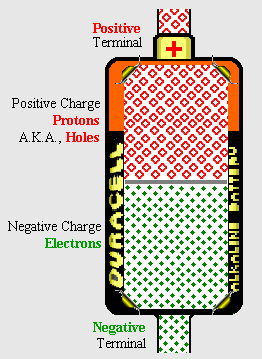
Voltage is an Excess of Electrons
seeking
a Deficit of Electrons (Holes)
|
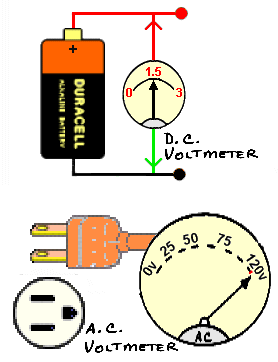
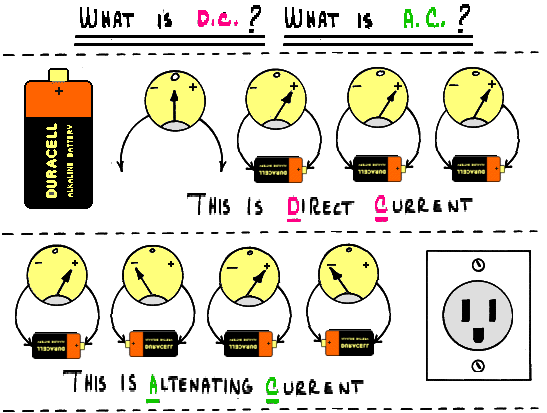
Two kinds of Voltages, Direct and
Alternating,
D.C. Direct
Current
A.C. Alternating
Current
|
|
.
 Electricity
is associated with electric charge, a property of certain elementary particles
such as electrons and protons,
two of the basic particles that make up the atoms of all ordinary matter.
Electric charges can be stationary, as in static electricity, or moving,
as in an electric current. Electricity
is associated with electric charge, a property of certain elementary particles
such as electrons and protons,
two of the basic particles that make up the atoms of all ordinary matter.
Electric charges can be stationary, as in static electricity, or moving,
as in an electric current. |
.
|
| |
|
.
|
R-Resistance
Resistance
to the Flow of Electrons, the
unit used is the OHM,
symbol:
.
 |
 |
 |
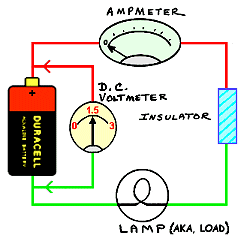
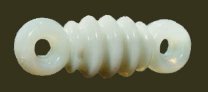
Insulator
Very High Resistance
|
Water
Moderate to Low Resistance
Pure water is an insulator, it
is the impurities that cause it to conduct; salt water being an extreme
example.
|
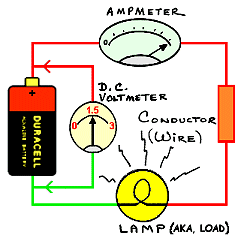
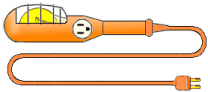
Conductor
in the form of an Electric
Cord
Very Low Resistance
|
|
|
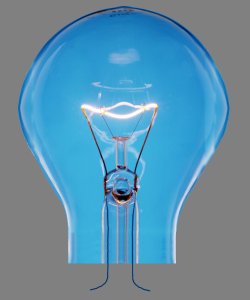
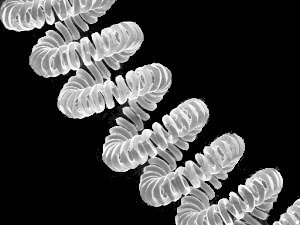
Some Well Known "Resistors"
 |
Filament Close
Up
|
|
Light Bulb Tungsten Filament
|
|
| |
|
.
|
Resistance
is a property.
A Resistor is an object, a thing that has the property of Resistance.
An extension cord has Resistance
but is not necessarily a Resistor.
Resistors are used in circuits for their resistive properties.
Below are some Resistors:
|
.
|
|
1/4 Watt
|
"Fixed"
|
. |
Single Turn Trimmer
|
"Pot" |
Multi-turn Trimmer
|

|

|
. |

|
 |

|
|
Fixed
|
Symbol
|
. |
Potentiometer (Pot)
|
Symbol
|
Potentiometer
|
| Resistor
Color Code pop
up |
|
|
|
|
 |
 |
 |
|
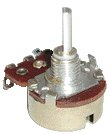
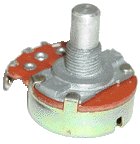
Potentiometer
|
Potentiometer |
Sliding Potentiometer |
| |
|
|
.
|
Potentiometer, A.K.A., Pot, Volume Control, Brightness, Contrast,
etc.
Potentiometer, as in Potential Difference
Potentiometer: voltage divider: a resistor
or series of resistors provided with taps at certain points and used to
provide various potential differences from a single power source. --webster
|
.
 |
 |
|
|
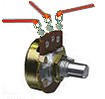
Pot wired as pot
|
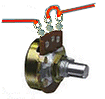
Pot wired as Rheostat
|
|
A.K.A., Voltage Divider
Varies Voltage
|
A.K.A., Variable
Resistor
Varies Current
|
|
|
|
|
|
Resistors
as
|
Voltage
Dividers |
|
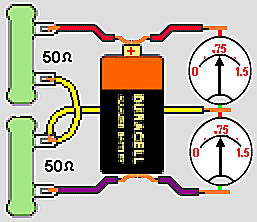
Ratio = 1 : 1
|
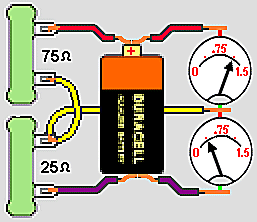
Ratio = 3 : 1
|
 |
 |
|
Fixed Resistors
configured as a Voltage Divider,
|
note how Voltages relate
to Resistances |
|
|
|
Variations on
|
a Theme |
 |
 |
|
Two Resistors: Lamp Filament & Rheostat
|
Fixed and Adjustable Power Resistors
configured as Voltage Divider
(Crude Transistor
Analog)
|
.
|
The
use of Resistors is not a very
efficient method of changing voltages;
e.g., if you have a 12 volt battery and you wanted to power a 6 volt bulb,
you would put a Resistor of the appropriate
value between the positive lead of the battery and one lead of the bulb
(in series).
The bulb would now be powered at
6 volts: the remaining 6 volts (of the 12 volt battery), would be "Dropped"
across the Resistor.
Using this method of voltage reduction,
the Resistor would consume energy;
in point of fact, the amount would be exactly the same as consumed by the
bulb. The energy consumed by the Resistor
would be in the form of Heat, and would be considered wasted..
|
.
|
|
Resistance
is Determined partially by Composition,
and is inversely proportional
to
Cross Sectional Area

| Note
that Resistance is Also proportional to Length |
|
|
|
----
.
|
I-Current
A.K.A.,
Electron Flow, the unit used is the AMP
.
|
Battery
|
Electron Flow
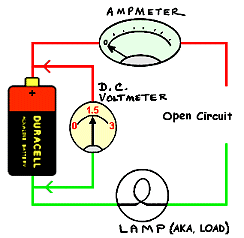
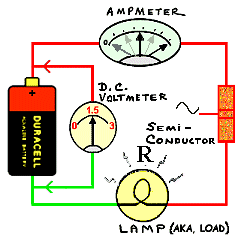
When the two terminals of a battery
are connected by a conductor, an electric current flows. One terminal continuously
sends electrons into the conductor,
while the other continuously receives electrons. The current flow is caused
by the voltage, or potential difference, between the terminals. Voltage
is measured in units called volts. Another name for a voltage is
electromotive force (EMF).
|
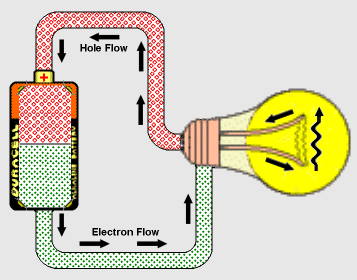 |
| Battery's Terminals
of Opposing Polarity: |
Electrons = (-) Charge / /
Holes
= (+) Charge
|
Negative
terminal has Excess of Electrons; Positive
terminal has Deficit of Electrons, A.K.A., Holes
|
|
Electron
Flow, D.C.
 |
 |
 |
The Animation depicts Electrons
flowing through a wire in one direction: D.C.
Individual Electrons don't actually move at (near) the speed of light
(C) in the wire, but as Electrons enter and exit the wire the EFFECT is
the same. It can be likened to Wave
Action pop up. |
|
.
|
|
Electron
Flow, A.C.
The Animation depicts Electrons flowing through a wire in Both
directions: A.C.
|
|
|
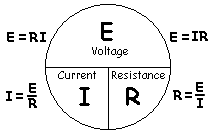
- --Easy
to remember Simplified OHMS LAW-Power
is missing for simplification
.
|
| . |
|
.
1
1
1
1
1
1
1
1
1
1
1
1
.
1
1
1
1
1
1
1
1
1
1
1
1.
1
1
1
1
1
1
1
1
1
1
1
1.
1
1
1
1
1
1
1
1
1
1
1
1.
1
1
1
1
1
1
1
1
1
1
1
1.
1
1
1
1
1
1
1
1
|
..
.E-R-I-Continued...
Story of the Humble Drop
Cord
|
..
| Voltage |
E |
VOLT |
Electrons exerting
a Potential Force,
ElectroMotive Force (EMF)
|
| Current |
I |
AMP
|
A Flow of Electrons |
| Resistance |
R |
OHM
|
A Real Physical Property resists
the flow of Current |
| Power |
P |
WATT
|
Electrons flowing
through a Resistance
(load)
generates heat, does Work...
|
Of
these entities, Resistance (R)
and Voltage (V) are
the only real physical properties; the rest--for the most part--are the
result of Voltage's
encounter with Resistance.
Resistance
is the property of a material to resist the flow of Electrons.
Everything has this resistive property: Air
resists greatly the flow of electrons, but they do flow--especially if
you are swinging a "nine-iron" on a hilltop, under low hanging dark
clouds in the summertime!
Copper wire also resists the flow of electrons--but
not very effectively; it makes a good Conductor.
Superconductors[1]
are the only materials that DO NOT resist the flow of electrons.
Speaking of the flow of electrons, that is
the definition of Current,
which is expressed in AMPS (I).
And, you guessed it: Electrons exert a potential
force measured in VOLTS
and--you're ahead of me--is called Voltage.
WOW, that was too easy; we've
covered it all in a few short sentences!
------------------
O p p
s !
Oh yea--except for POWER.
--Duh...
POWER,
is the result of VOLTS,
and OHMS,
all getting together!
That is, the Energy
released by Electrons (I)
flowing through a Resistance (R),
the number of which being determined by the Electron potential (E).
--Huh?What
did he Betty Sue?
He said that [I
= E/R]
therefore
[P = I
x E].
Oh.
--------- --------- ---------
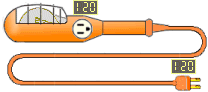
OK, you have a 100
Watt light bulb in a drop cord (Drop Light);
You plug it in to the 120 VOLT
wall outlet  and turn it on.
The light bulb offers a resistance to the
120
volt (electron potential) flow
of electrons coming out of the wall socket--they're
just sitting there doing nothing, until they find a path Home...
If the light bulb's resistance is too low
the fuse will blow!
If the light bulb's resistance is too high,
not much will happen;
But, if the light bulb's resistance is "Just
Right," it will consume 100 WATTS
of Power,
to produce energy in the form of light; also, it gets hot as Hell--put
your tongue on it, you'll see what I mean.
The light bulb/Resistor
performed a useful function: it put out light to read by, and it also produced
Heat. Heat that is thought of as "Loss," is technically still light,
but at a wavelength few can read by.
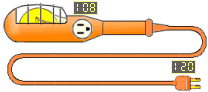
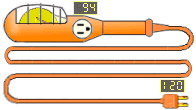
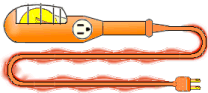 And, by the way, that drop cord (Drop Light)
is also resistive and will get warm, which is Loss--wasted energy.
And, by the way, that drop cord (Drop Light)
is also resistive and will get warm, which is Loss--wasted energy.
Illustration of "Voltage Drop," A.K.A.,
IR Drop
|
|
Hear what Mrs R.J. of Duluth
had to say:
"That LOAD certainly
made my flowers Grow."
|
|
|
|
|
Part
2
Copyright Comments or
Questions about this site
Suggestions are
Solicited, P l e a s e !
|
|
.
1
1
1
1
1
1
1
1
1
1
1
1
1
1
1
1
1
1
1
1
1
1
1
1
1
1
1
1
1
1..
|
|